
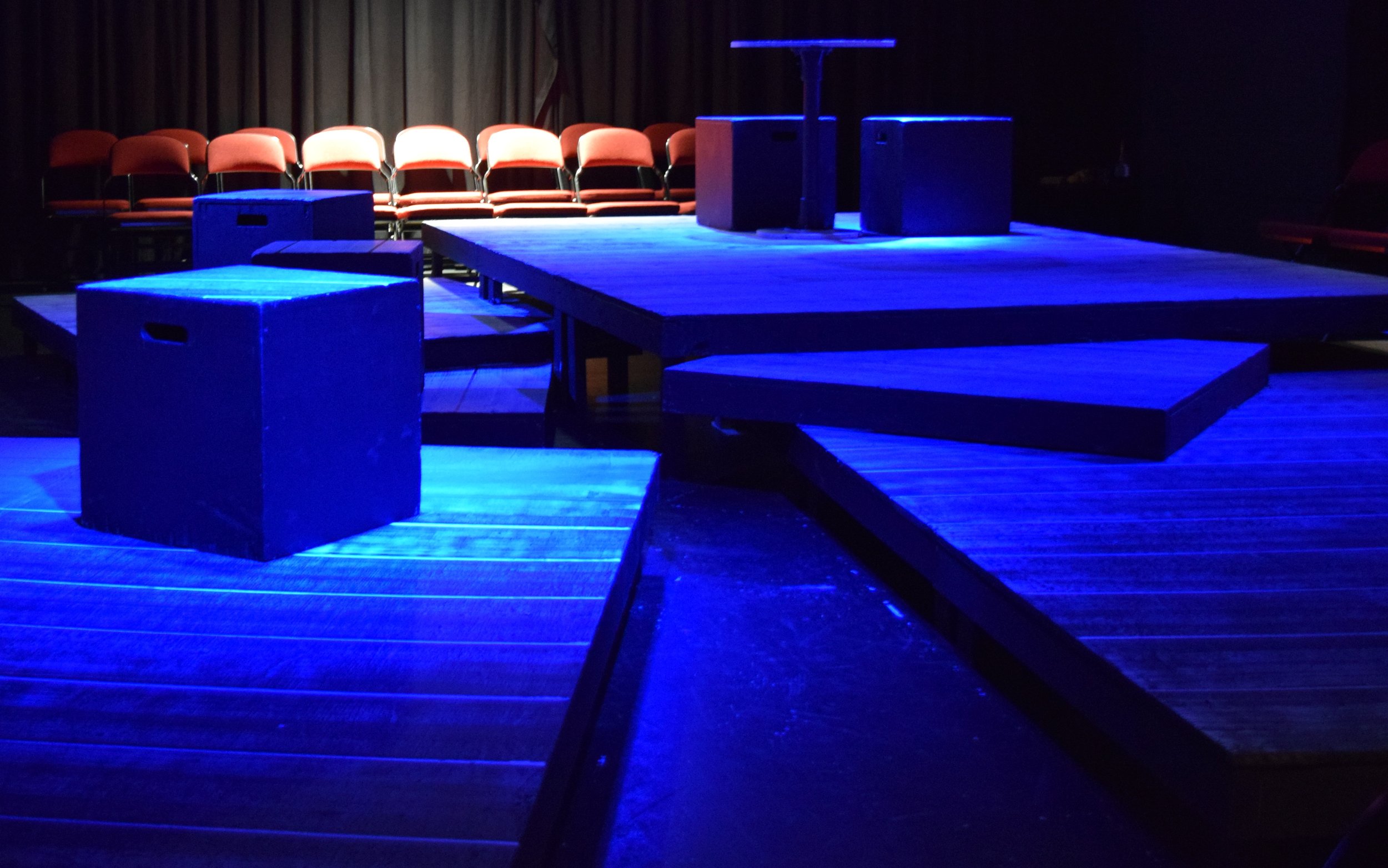
We don’t coach public speaking. We direct the room.
Introductory advice tells you to stand up straight, make eye contact, and project confidence.
We calibrate the precise mechanics of human interaction: the micro-seconds of physical synchronicity, the vocal weight, and the spatial command that compel an audience’s next decision.
It is the ability to walk onto a stage and know the outcome before the lights come up.
Foundations matter.
Accelerators, incubators, and speech coaches do essential work. They teach slide design, message architecture, and how to deliver lines without freezing. They hand you the script and establish the baseline of the craft.
We don’t provide or replace that training. It’s our prerequisite.
Where introductory training reaches its ceiling, directorial command begins.
When a performance collapses on stage, audiences rarely understand the mechanics of what failed. They cannot diagnose a status leak, an unsupported breath, or an unscripted reflex. Instead, they reach for lazy abstractions—dismissing the leader as “inauthentic,” “stiff,” or “unconvincing.” They don’t know why the performance failed; they only know they won’t follow it.
We deconstruct those micro-behaviors in the rehearsal room so they never surface in the boardroom. We do not teach you how to look comfortable on a stage. We ensure your performance compels the exact, measurable action you came to secure.
Who We Direct
-
You have the numbers, the deck, and the market validation.
But an institutional roadshow isn’t a presentation—it’s a touring production playing forty hostile rooms in ten days. And right now, you are stepping into those rooms like an actor hoping to be cast.
When the pressure spikes, untrained founders retreat into the text. You stare at your deck, over-explain your data, and qualify your answers because you don’t know how to play the action. The investor doesn’t doubt your technology; they doubt the human being in front of them can hold the center of the stage.
A Director doesn’t audit your cap table. We bring you into the rehearsal room to calibrate the instrument itself: the breath support, the physical stillness, and the precise subtext that eliminates doubt. We ensure you stop auditioning for capital and start directing the room.
-
Your leadership team knows how to recite a script. They have delivered the lines a hundred times without stumbling.
But an enterprise pivot or annual summit is not a monologue—it’s an ensemble production under blinding scrutiny.
When an executive team steps onto a mainstage, the audience doesn’t listen to the corporate memo; they watch the subtext. They register the physical hesitation, the uncoordinated handoffs, and the rigid reliance on teleprompters. You receive polite applause because you sign their paychecks, but by Monday morning, not a single behavior changes. You didn’t lead an enterprise; you staged a corporate recital.
We don’t write your strategic narrative. We direct the ensemble that has to execute it. We calibrate the spatial command, vocal weight, and performative intention of your leadership on stage—ensuring your executives don’t merely survive their time slot, but direct the audience to the exact outcome you scripted.
-
You already hold the room. You speak from arena stages, deliver closing arguments in high-stakes litigation, or carry the weight of a recurring public platform. You don’t need basic public speaking advice, and you don’t need help securing an audience.
But like most experienced performers outside the theatre, you are attempting to direct yourself.
In a professional production, no actor directs their own performance. You cannot evaluate your own sightlines, calibrate your subtext, and measure audience impact from center stage.
Yet in the corporate, legal, and political arenas, seasoned speakers do it every week. Your advisors debate your ideas, your co-counsel refines your legal arguments, and your team manages your logistics. Not a single person in your orbit is auditing the actual performance. Over time, routine replaces precision, and even high-caliber performers begin relying on habit rather than intention.
We provide the external directorial eye that no performer can provide for themselves. We bring you into the rehearsal room before your next major appearance to deconstruct the physical and vocal mechanics of your delivery—ensuring that every time you step into the light, your presence commands the exact verdict, conviction, and legacy you came to secure.
The Mechanics of Action
Active Communication Methodology // The Technical Blueprint
The Core Inversion
Conventional communication is built backwards.
Leaders often start with Information ("What do I need to tell them?"), assemble a deck, and hope the audience experiences a vague Emotion ("I hope they feel confident in the vision"). They treat communication as an unloading of data and leave the outcome to chance.
The Active Communication Methodology (ACM) reverses the physics.
In professional directing, every line, gesture, and pause is governed by Action—the specific, observable behavior you demand from the other person in the room. Clarity is not the goal; action is. We engineer the performance from the outcome backward:
The Action (DMO): The deliberate, measurable, and observable commitment the room must make.
The Emotion: The precise psychological condition required to support that action—urgency, trust, friction, or resolve.
The Information: The narrative and data required to earn that emotional shift—stripping away every syllable of filler.
The Performance: The physical, vocal, and spatial execution that carries the message across the threshold.
The Standard: The Camera Test
We do not deal in internal abstractions. We deal in physical evidence.
If an action or an emotion cannot be seen, heard, and captured by an external camera lens, it does not exist. It is merely a feeling the speaker is having on their own behalf.
Through the ACM, every rehearsal is subjected to this diagnostic baseline: auditing your status leaks, your breath support, and your physical stillness against the exact behavioral outcome you scripted. We don't evaluate how you felt on stage. We evaluate whether your performance compelled the room to act.